Interventions in socio-emotional skills and literacy: the school as a protective environment
The morning opened with a panel dedicated to interventions in socio-emotional learning and literacy, emphasizing the crucial role that teachers and social service professionals play in building resilience among children and youth.
Ana Luiza do Amaral, from the Social Service of Industry (SESI), highlighted three central challenges in contemporary education: the crisis of student engagement, the difficulty in fostering intrinsic motivation for learning, and the need to recognize the singularity of each child. According to her, creating educational experiences that generate resonance—meaningful connections between content, emotions, and everyday life— is one of the most effective pathways to restoring students’ relationship with learning.
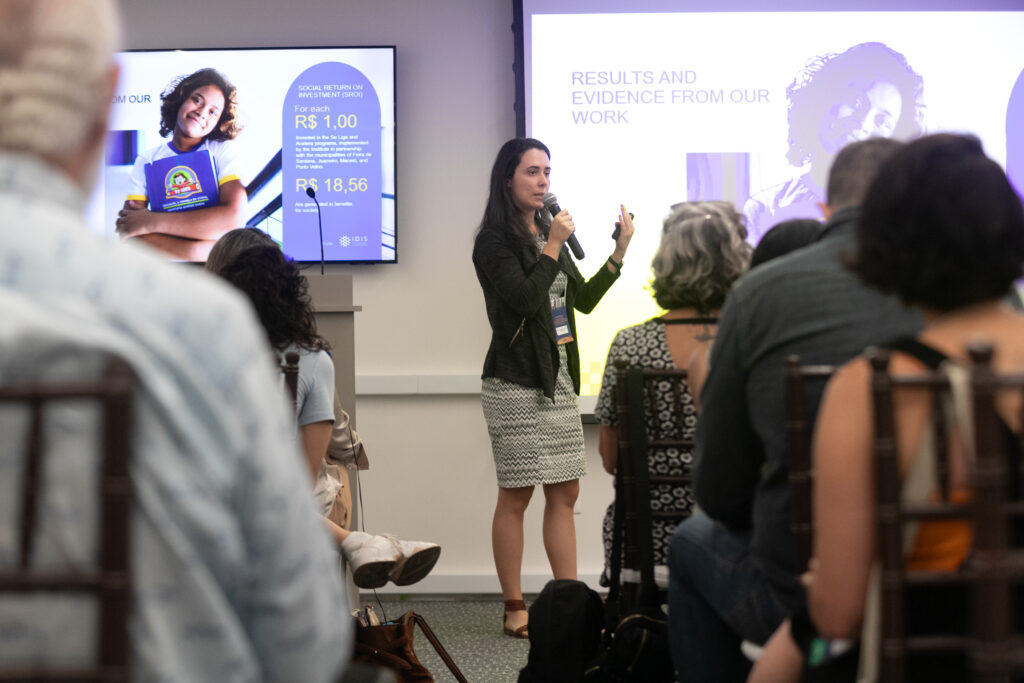
Next, Ana Carolina Zuanazzi Fernandes, from the Ayrton Senna Institute, presented results from a study involving nearly 90,000 public high school students across Brazil. The data showed that 13% of young people did not feel connected to school, while one in four reported experiencing bullying—a rate four times higher among Black students. The study also found that students with stronger socio-emotional skills perform better in Portuguese and math, use more effective study strategies, and demonstrate greater respect for diversity. SEL interventions additionally helped reduce bullying behaviors, reinforcing their potential as tools for school well-being and protection.
Representing the National Institute for Children and Adolescents (INAU) in Uruguay, Maria Ximena Giani discussed different types of violence experienced in childhood—instrumental, symbolic, emotional, and expressive. She explained that instrumental violence involves using the child as a means to affect others; symbolic violence occurs through humiliation and devaluation; emotional violence includes actions that induce fear, insecurity, or rejection; and expressive violence is manifested in impulsive or explosive behaviors by adults. Giani emphasized that social vulnerability, territorial segregation, the presence of illegal economies, and barriers to justice create a complex scenario that makes reducing violence difficult—a context similar to Brazil’s.
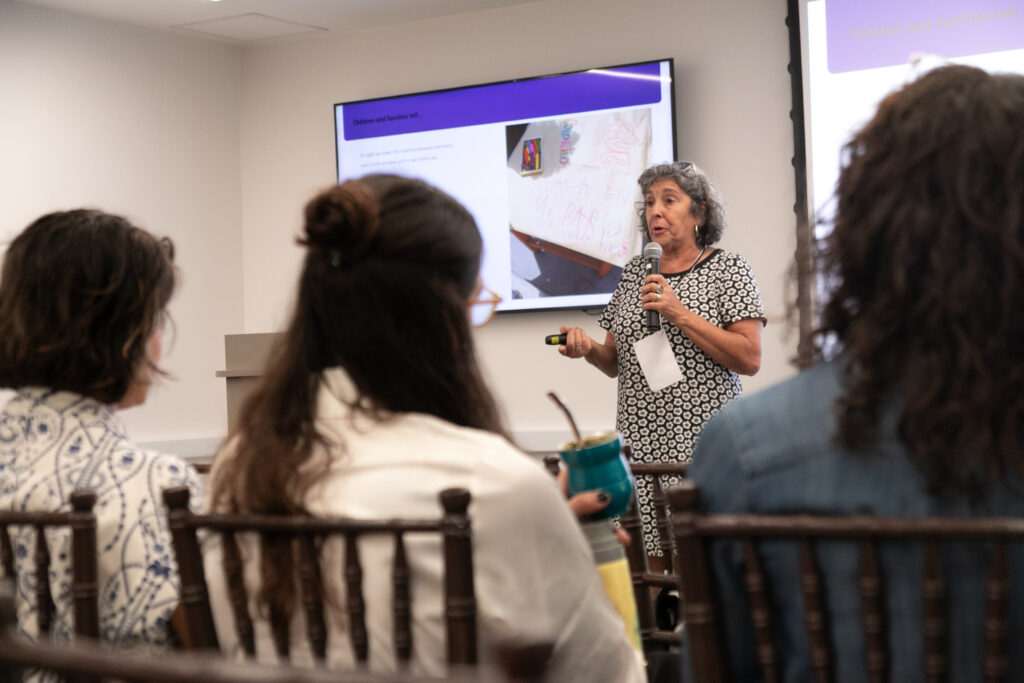
Uruguayan social activist Elba Núñez continued the discussion by focusing on protecting children and families living in high-risk areas. She drew attention to the rise of school shootings in Latin America and to the impact of contemporary wars on childhood, arguing that schools must be prepared for extreme situations. Núñez discussed the proposal of the “blue room,” a protective space built in a school-bunker format to shelter children and families during emergencies—a project currently under evaluation by the Uruguayan government.
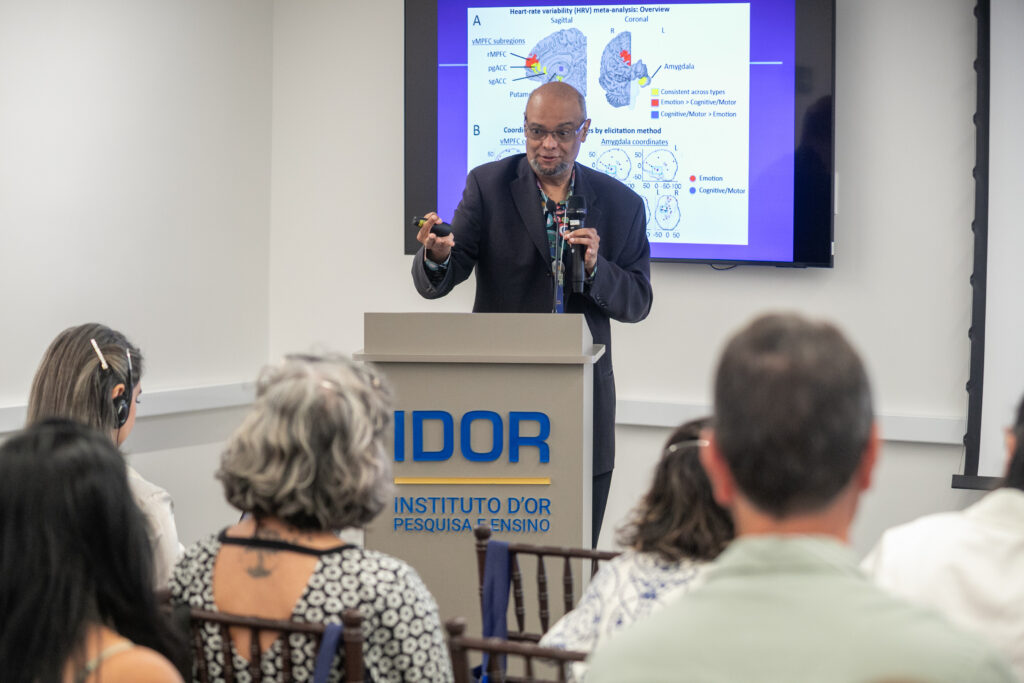
Closing the panel, researcher Julian Thayer, from the University of California, Irvine, presented studies showing how childhood adversity relates to Heart Rate Variability (HRV), a biological indicator strongly associated with resilience. HRV measures variations in the time interval between heartbeats and reflects the body’s ability to adapt to stress. The higher the HRV, the better the emotional regulation and the lower the lifetime risk of psychopathology. Thayer demonstrated that simple interventions—such as weekly 30-minute breathing exercises over five weeks—were capable of increasing HRV in children, suggesting a low-cost, scalable, and highly feasible method.
Workshop: how to design context-sensitive interventions for education in high-adversity areas
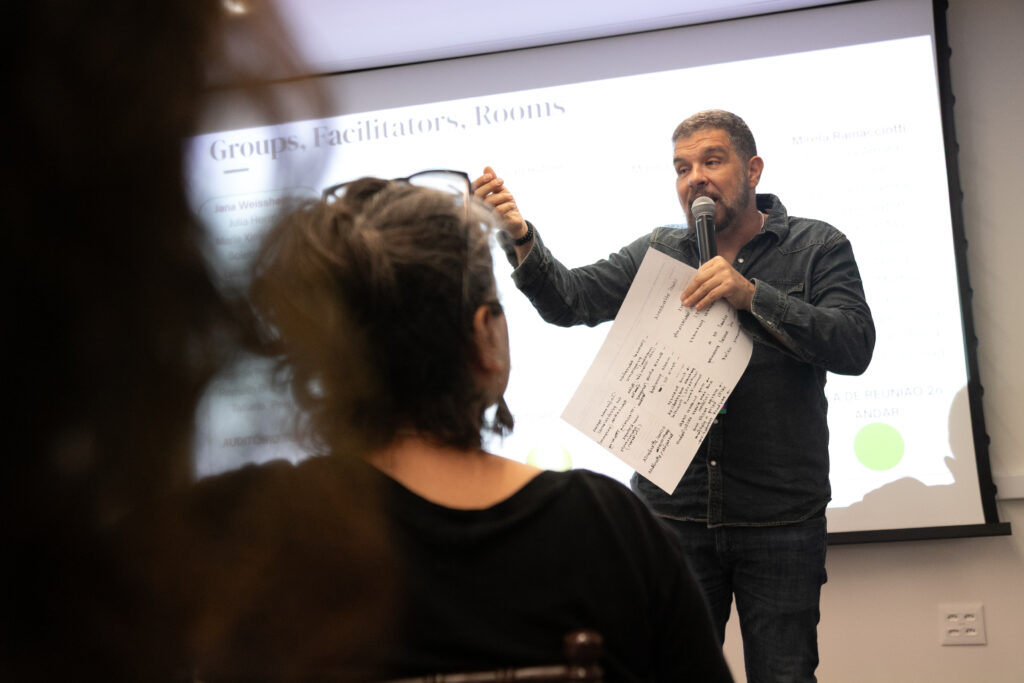
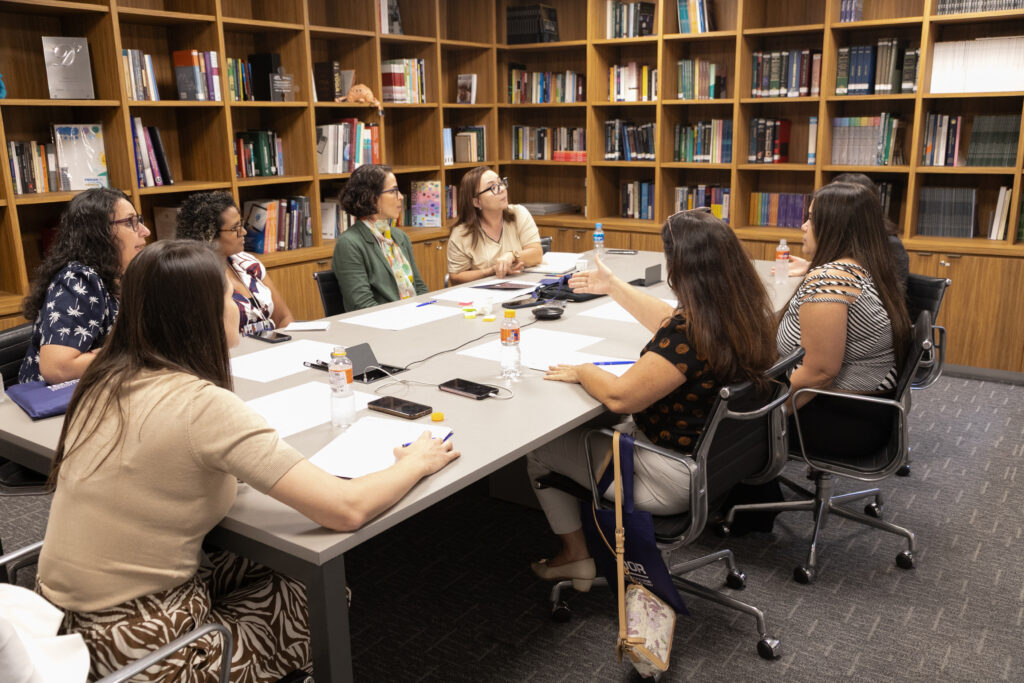
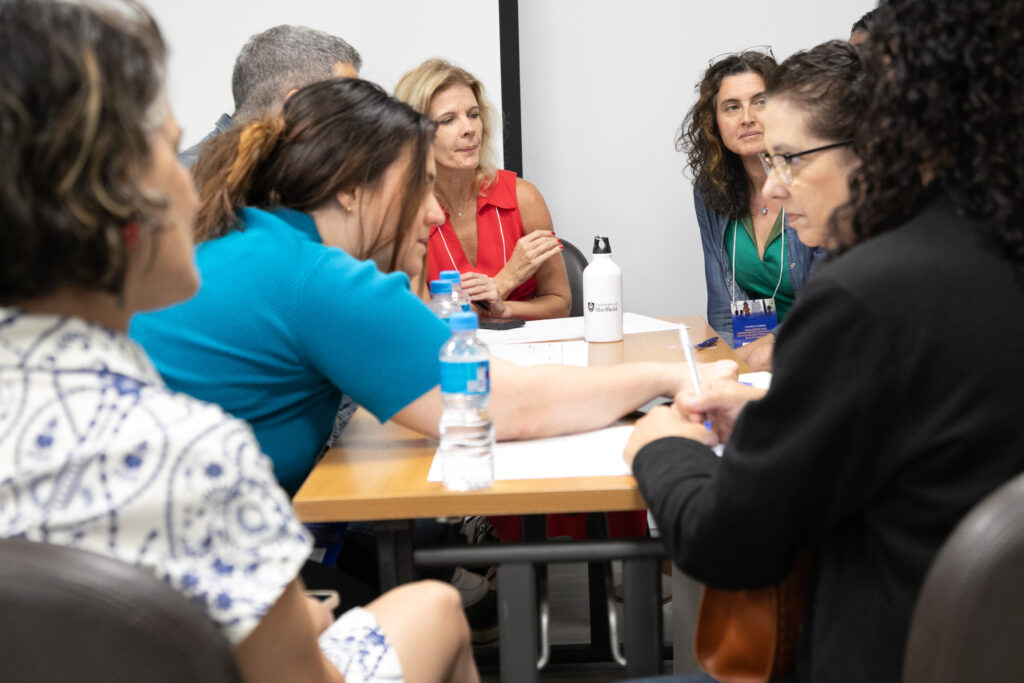
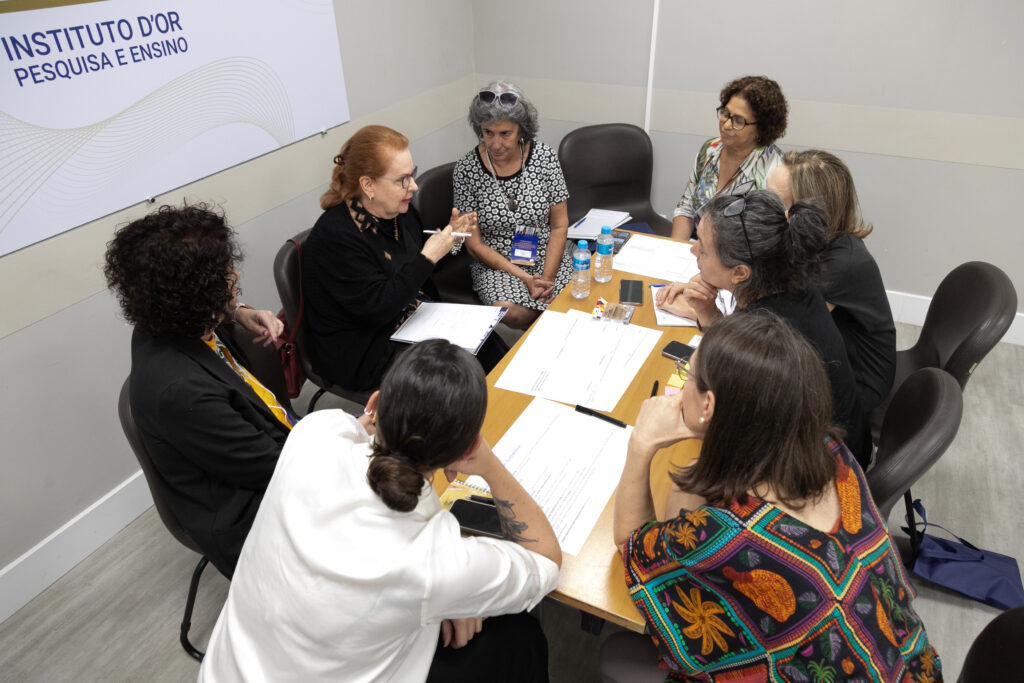
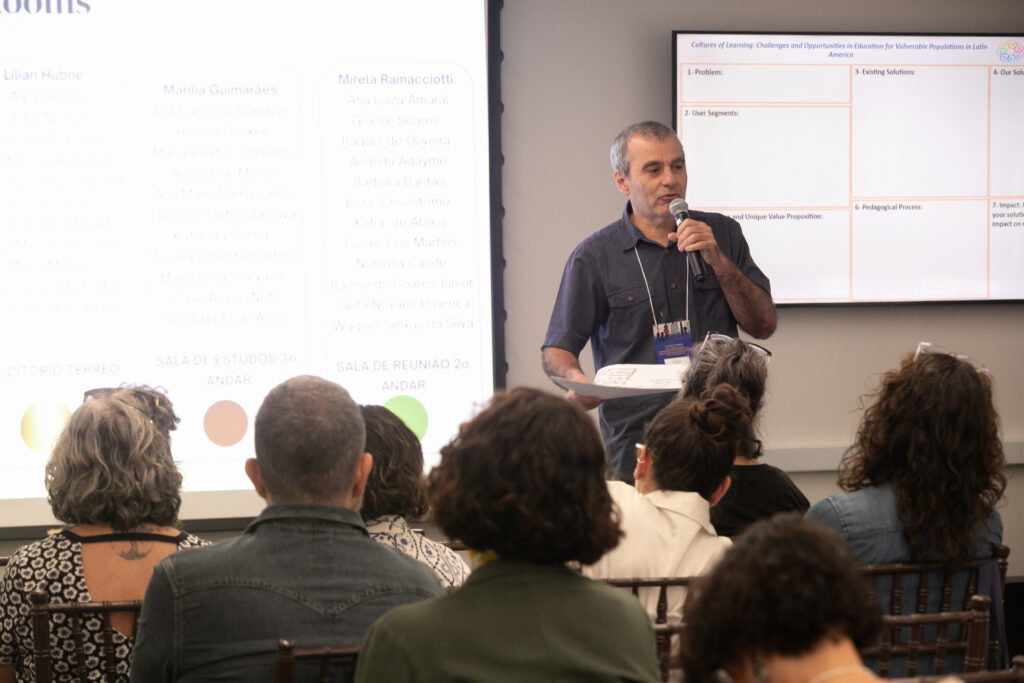
After the panels, participants and speakers took part in a hands-on workshop to transform the day’s insights into concrete proposals. Divided into five thematic groups, each mediated by a specialist, the participants worked on solutions for urgent challenges faced by schools in Brazil and other Latin American countries.
Group 1 — School dropout (mediator: Guilherme Brockinton)
The group emphasized that keeping children in school requires both structural and social measures. Key priorities included improving infrastructure, expanding full-time schooling, ensuring high-quality school meals, and developing projects capable of mobilizing public financial support to sustain these actions.
Group 2 — Schools in areas of violence (mediator: Fernando Louzada)
To support educators working in regions marked by violence, the group recommended measures such as specialized training for handling high-risk situations, the creation of educational emergency protocols, workshop-based training activities, and ongoing supervision and psychological support for education professionals.
Group 3 — Parental education (mediator: Alejandra Carboni)
The central proposal was to train community agents who serve as trusted local leaders capable of engaging parents and caregivers in parental education workshops. These workshops would address the identification of violent practices, the strengthening of emotional self-regulation skills, and the creation of safe spaces for adults to reflect on their own histories and caregiving patterns.
Group 4 — Sense of belonging in high-adversity zones (mediator: Marilia Zaluar)
This group discussed strategies to expand young people’s sense of belonging—not only within the school but across the broader community. Suggestions included coordinated welcoming actions in different community spheres, offering courses for parents within the school environment (encouraging their presence and strengthening ties with their children’s school life), and creating community protocols for promoting belonging, with solutions tailored to each local reality.
Group 5 — Misinformation (mediator: Mirela Ramacciotti)
The proposed solution involved leveraging existing centers, such as CAPS and CRIA, to strengthen the information network surrounding children and adolescents. The idea was to use this infrastructure to build a continuous data system capable of guiding evidence-based practices and fostering a more holistic understanding of young people, beyond academic performance. The group also recommended incorporating data science training for teachers so they can participate in data collection and interpretation.
At the end of the workshop, the groups shared their proposals in a moment of synthesis and collaboration. The diversity of ideas reflected the strength of the event: researchers, educators, and professionals from the public and private sectors combining distinct yet convergent perspectives to build realistic solutions sensitive to Latin America’s inequalities.
The second day of the conference highlighted the need for integrated interventions to transform the educational experiences of children and youth in adverse contexts. The discussions and activities reinforced the importance of international collaboration and of creating strategies that respect the unique characteristics of each Latin American community.