Initiative highlights challenges and opportunities for health data sharing in Latin America

- PT
- |
- EN
Initiative highlights challenges and opportunities for health data sharing in Latin America
On November 10, 11 and 12, the D’Or Institute for Research and Education (IDOR) and the Latin American team of the BRIDGE project participated in the Latin America Bioimaging (LABI) Meeting, held in Buenos Aires. The event brought together bioimaging scientists, technology developers and researchers from different countries. LABI aims to foster scientific collaboration and harness bioimaging technologies to address complex biological challenges, promoting solutions that can benefit both the region and the global scientific community.
IDOR’s participation aligned with the Brain Research International Data Governance & Exchange (BRIDGE) project, funded by the Wellcome Trust. The initiative seeks to develop an International Data Governance Framework (IDGF) dedicated to the secure and ethical sharing of information in the fields of neuroscience and mental health.
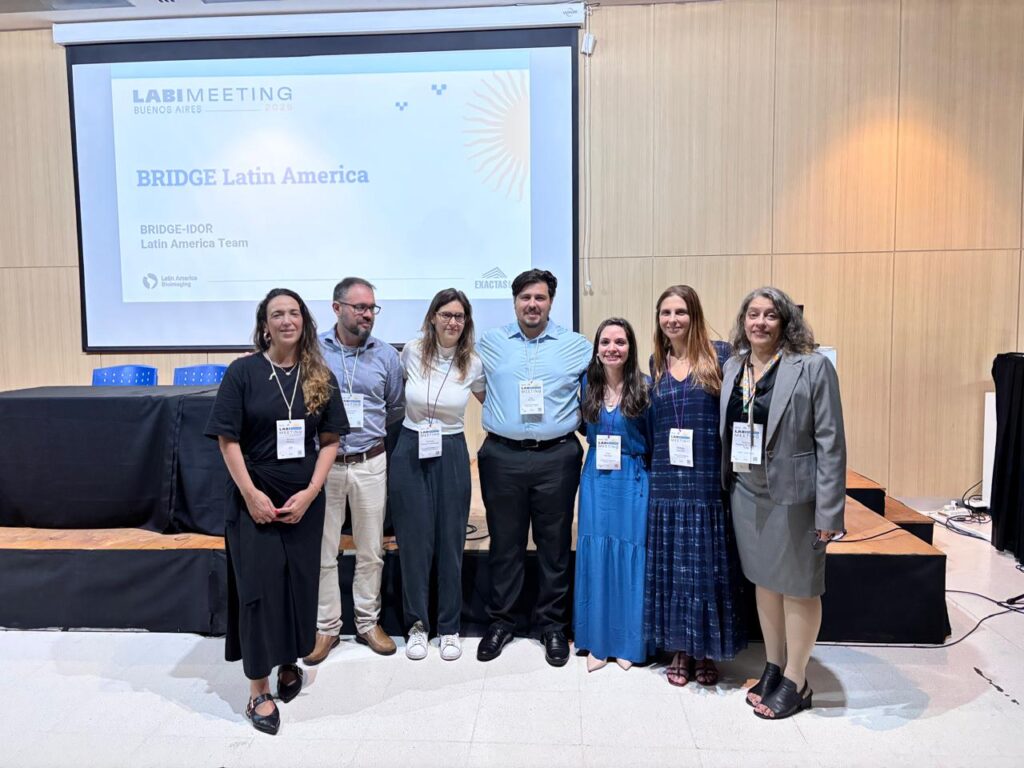
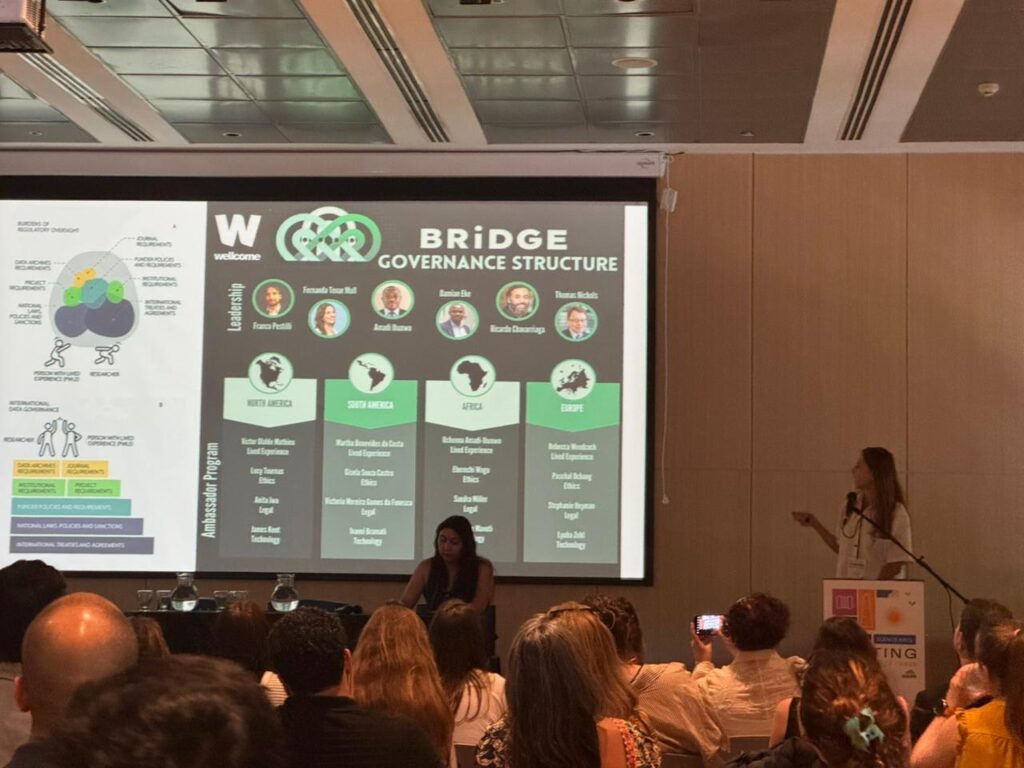
Throughout the LABI Meeting, the BRIDGE team joined scientific sessions, presented preliminary results and led a workshop dedicated to discussing pathways for data governance in Latin America (LATAM).

IDOR’s Contributions to the Event
IDOR President Dr. Fernanda Tovar-Moll, who also serves as the BRIDGE LATAM Principal Investigator, took part in two key sessions. On the first day, she spoke at the Technical Session: In-vivo Imaging from Cell to Human, presenting translational applications of clinical neuroimaging and highlighting opportunities for collaboration in bioimaging across Latin America.
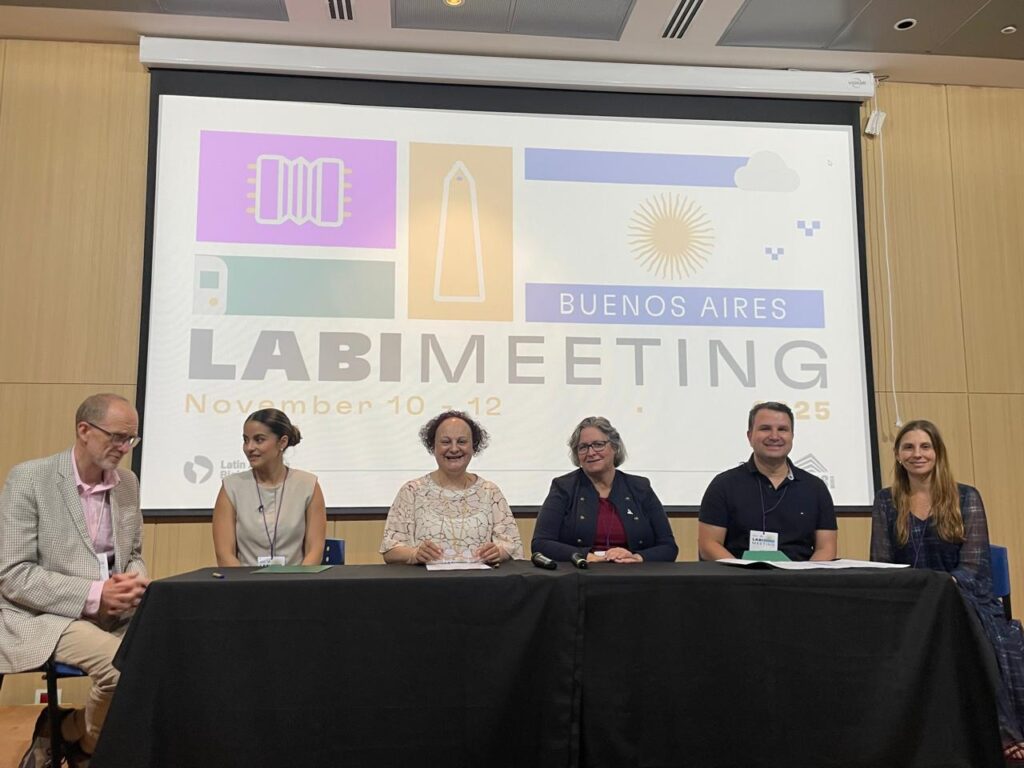
On the second day, Tovar-Moll participated in the roundtable Towards Regional Open Data Infrastructure, which focused on the creation of an open, regional infrastructure for scientific data. The session provided an opportunity to reintroduce the BRIDGE project and invite attendees to complete the initiative’s questionnaire for Latin America.
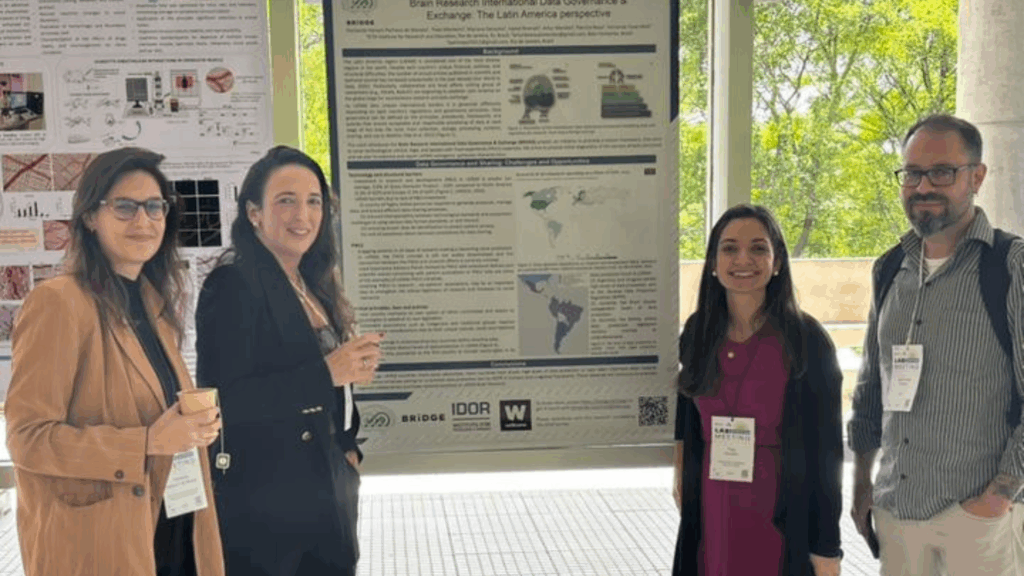
Also on the second day, IDOR’s Technology and Imaging Manager, Ivanei Bramati, who serves as the BRIDGE LATAM Technology Ambassador, joined the Lightning Talks with the presentation BRIDGE: the Latin America perspective. Bramati also showcased the project’s poster and invited participants to learn more about the initiative.
Several other researchers invited by BRIDGE contributed to the event’s discussions. Dr. Emiliano Medei (CENABIO-UFRJ/IDOR) and Dr. Rosana Rodrigues (UFRJ/IDOR) presented examples of translational applications of neuroscience and bioimaging in Brazil, emphasizing the relationship between basic science, data infrastructure, artificial intelligence and clinical impact.
The event also included the participation of Francesco Rossi, a researcher from the University of Uruguay and President of the Federation of Latin American and Caribbean Neuroscience Associations (FALAN). Invited by BRIDGE and IDOR, he contributed to the debate on regional integration in neuroscience.
BRIDGE Workshop: Connecting Regional Challenges and Capacities
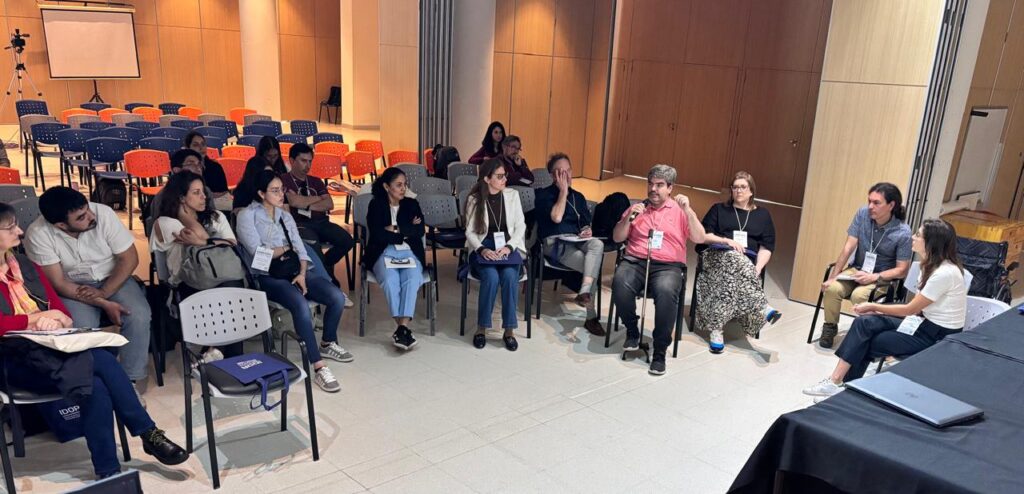
One of the highlights of the event was the workshop BRIDGE Round Table: Data Sharing in Latin America, which brought together about 20 participants from different fields and countries. The session was led by the full project team.
Researcher Fernanda Hansen (LATAM BRIDGE Postdoctoral Fellow/IDOR) opened the workshop by introducing the project and presenting examples of her work with IDOR datasets.
The session also included contributions from Artur de Araújo Mendes (BRIDGE Legal and Ethics Ambassador), who presented the legal and ethical aspects currently being mapped by the initiative, and from Patricia Ferreira de Oliveira Rosa (People with Lived Experience Ambassador), who shared her perspective living with ASD and ADHD, as well as her experience as a caregiver for a person with cognitive and motor impairments.
Next, researchers Thais Monteiro and Mariana Genuino (LATAM BRIDGE Research Members/IDOR) presented preliminary findings from the study on scientific collaboration in Latin America. Responses were collected from participants in seven countries: Brazil, Argentina, Chile, Bolivia, Mexico, Peru and Uruguay.
Challenges for a Regional Data Framework
Legislative diversity across Latin American countries was the central issue discussed during the event. Each nation maintains its own ethics committee systems, data protection laws and research-specific regulations, making it difficult to understand how each country defines, classifies and governs confidential data. This fragmentation not only complicates the execution of multicenter studies but also hinders the development of a large-scale collaborative infrastructure essential for advancing research in neuroscience and mental health.
Another widely discussed challenge was the lack of knowledge about the technical and regulatory requirements needed for the secure sharing of data across countries. Researchers and professionals from different regions reported uncertainty regarding procedures, security standards, required documentation and ethical boundaries related to the use and transfer of sensitive data. Although other issues—such as investments in Research and Development (R&D) and the participation of People with Lived Experience (PWLE)—were also mentioned, it became clear that regulatory barriers remain the greatest obstacle to establishing a regional data governance framework in Latin America.
The Role of the BRIDGE Project
BRIDGE was designed precisely to address these barriers. Its proposal is to build a comprehensive framework that integrates technological, ethical and legal knowledge with the perspectives of PWLE. The initiative aims to map the main difficulties identified by researchers and examine characteristics specific to Latin American subregions, providing more accurate diagnoses and recommendations for the future.
Despite the challenges, several countries in the region have begun strengthening their data protection policies or advancing collaborative efforts. This movement seeks to establish a shared regulatory foundation that would facilitate information exchange and support the development of tailored solutions for brain research in the region.
Pathways and Commitments for the Future
The meeting also marked a strategic step toward strengthening regional efforts in neuroimaging and data governance: during the event, Dr. Fernanda Tovar-Moll signed a Memorandum of Understanding (MoU), establishing a formal partnership between IDOR and the LABI Meeting.
An MoU is a document that outlines an institution’s intention to collaborate, defining shared objectives, areas of cooperation and general commitments. The agreement represents an important milestone, reinforcing IDOR’s role as an active partner in innovation networks connected to bioimaging, and strengthening Brazil’s position in discussions on scientific infrastructure across Latin America.
IDOR’s presence at the LABI Meeting underscores the institute’s commitment to promoting collaborative science geared toward social impact. By contributing to global debates on data governance and offering analyses tailored to Latin America’s realities, the BRIDGE project positions itself as an essential initiative for improving the quality and integration of neuroscience research in the region.

11.11.2025